
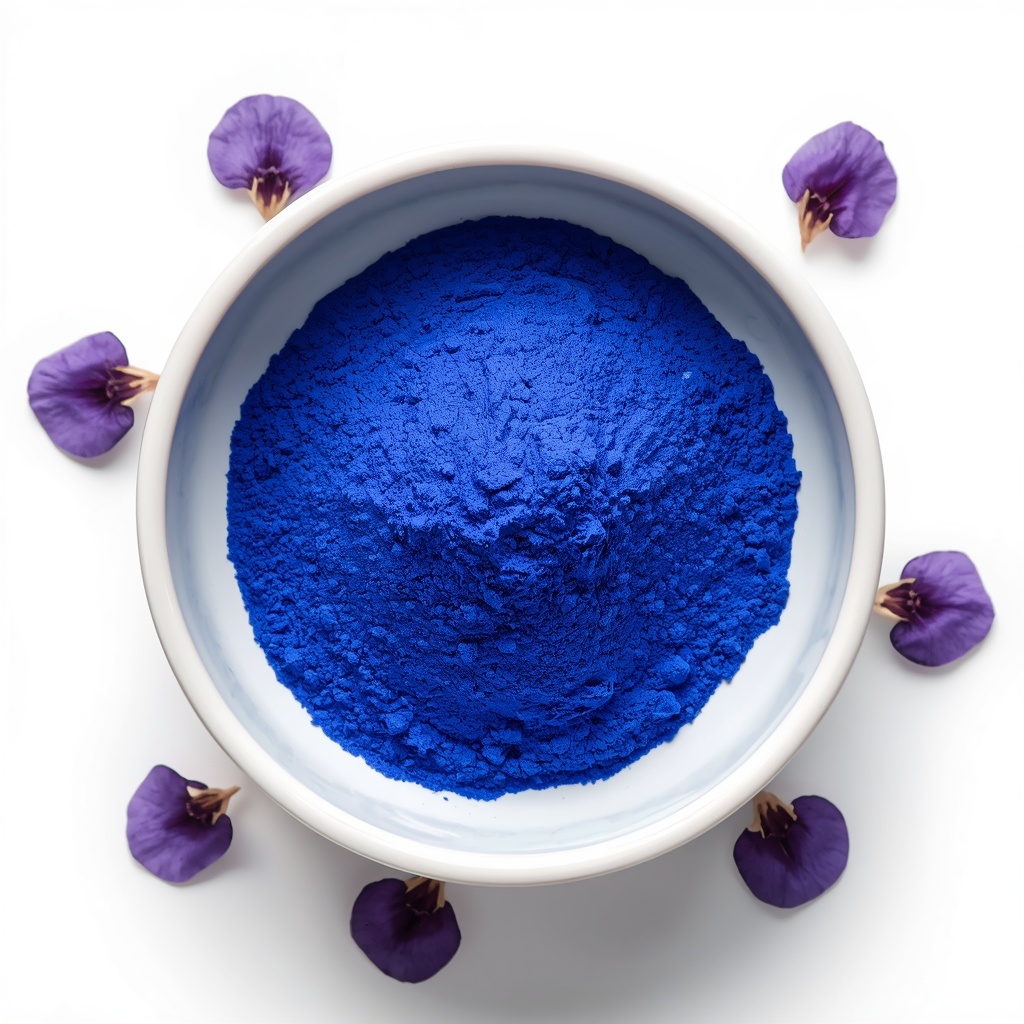
The global food and beverage industry is undergoing a structural shift away from synthetic dyes like FD&C Blue No. 1 and No. 2. As regulatory pressures mount and consumer demand for “clean label” products accelerates, commercial food enterprises and contract manufacturers (co-packers) require stable, scalable, and natural alternatives.
Butterfly Pea Flower Powder (Clitoria ternatea) has emerged as the premier natural blue colorant in the B2B sector. Engineered for high-volume manufacturing, this highly soluble botanical extract provides R&D technologists with a functional, heat-stable, and visually dynamic ingredient that meets strict international food safety standards.
What is Butterfly Pea Flower Powder?
Butterfly Pea Flower Powder is produced by drying and finely milling the edible flowers of Clitoria ternatea, a flowering plant native to Southeast Asia. The flower has been traditionally consumed for centuries in herbal beverages and culinary applications due to its naturally vibrant blue color.
The distinctive color comes from naturally occurring anthocyanins, water-soluble plant pigments that respond to changes in pH. In neutral conditions, the powder produces a brilliant blue color. When acidic ingredients such as lemon juice or citric acid are added, the color gradually changes to purple and eventually pink, creating visually attractive food and beverage products without synthetic colorants.
Compared with whole dried flowers, the powdered form offers improved processing efficiency, faster dispersion, and greater consistency in commercial manufacturing.
Technical Overview and pH-Reactive Properties
At its core, the pigmentation in our industrial-grade Butterfly Pea Flower Powder is driven by ternatins, a specific group of highly stable anthocyanins. Unlike spirulina extract, which is highly sensitive to heat and prone to fading during pasteurization, butterfly pea powder demonstrates superior thermal stability, making it viable for both cold-fill and hot-fill commercial processes.
For R&D personnel and formulation scientists, the most valuable characteristic of this botanical powder is its dynamic pH reactivity. This allows a single bulk ingredient to yield multiple distinct color profiles across different product matrixes:
Highly Acidic (pH 2.0 – 3.0): Transitions into a bright magenta or pink.
Alkaline to Neutral (pH 7.0 – 8.0): Yields a deep, vibrant blue.
Mildly Acidic (pH 4.0 – 5.0): Shifts to an intense royal purple.
Core Commercial Applications
The structural stability and 100% water solubility of our premium dehydrated powder make it an indispensable asset across multiple manufacturing verticals.
- Functional Beverages and RTD Drinks
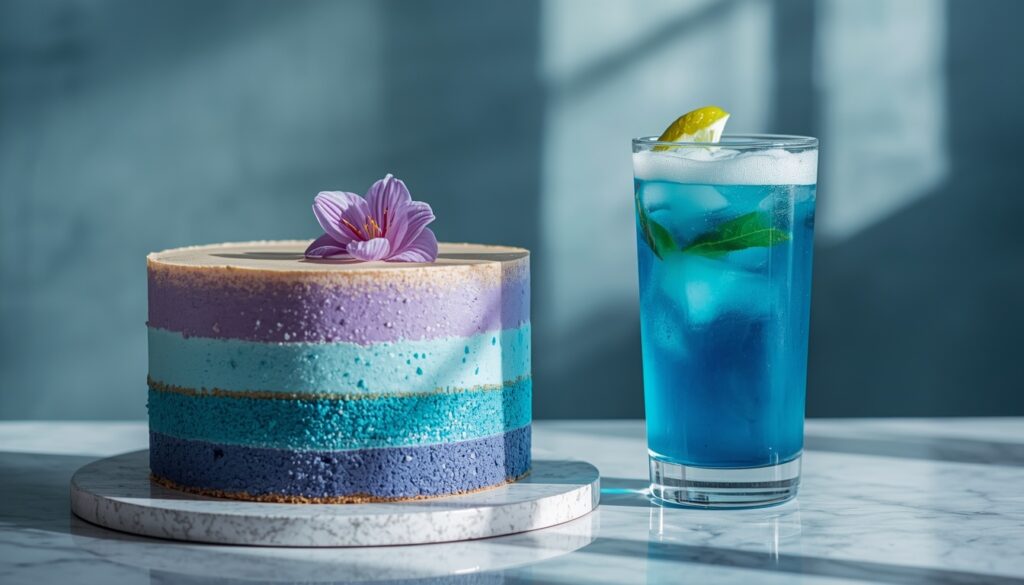
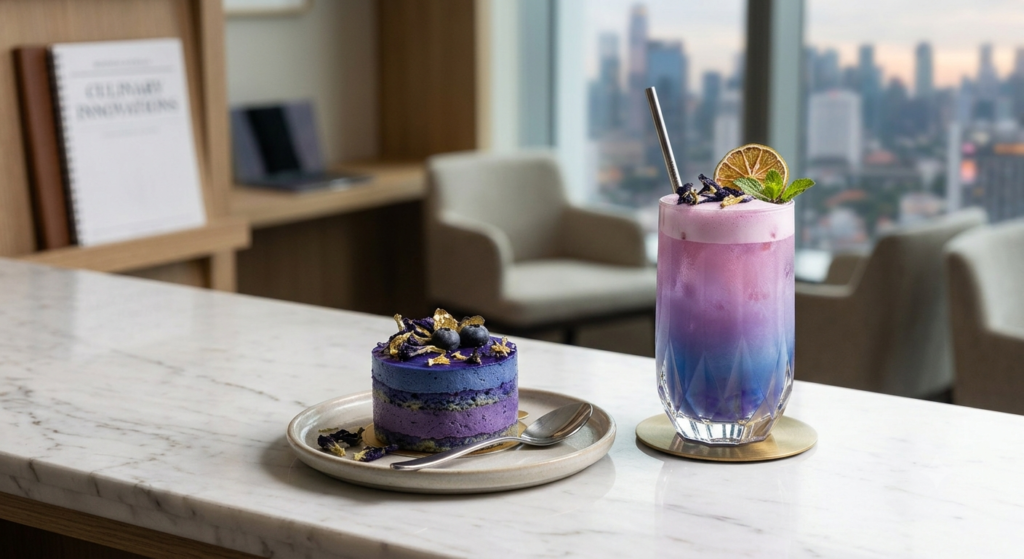
The beverage industry is the largest consumer of natural blue colorants. Our ultra-fine powder dissolves completely without leaving fibrous sedimentation or chalky residue. It is heavily procured for ready-to-drink (RTD) teas, functional energy drinks, clear electrolyte waters, and craft spirits. Beverage formulators frequently leverage the pH shift, utilizing citric acid dosing systems to create color-changing consumer experiences upon mixing.
- Commercial Bakery and Confectionery
Industrial bakeries require colorants that can withstand prolonged high-temperature baking cycles. Butterfly Pea Flower Powder maintains its color integrity in dough matrixes for artisanal breads, macarons, and layered cakes. In the confectionery space, it replaces synthetic blues in gummy manufacturing, hard candies, and premium white chocolate coatings.
- Dairy Processing and Plant-Based Alternatives
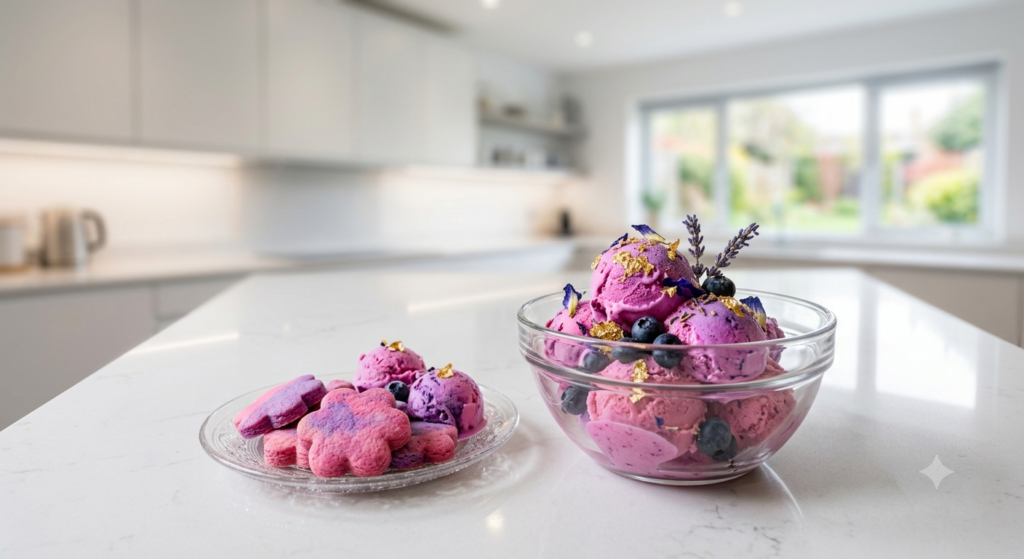
The powder homogenizes seamlessly with high-fat and high-protein bases. It is utilized by dairy co-packers to formulate premium ice creams, artisanal yogurts, and milk blends. In the rapidly expanding plant-based sector, it provides a striking visual differentiator for oat, almond, and soy-based beverage lines without altering the intended flavor profile.
Advantages for Product Development Teams
Across global markets, consumers continue to favor products made with recognizable and minimally processed ingredients.
For food technologists and formulation specialists, Butterfly Pea Flower Powder provides several technical benefits.
- Excellent Processing Performance
The fine powder disperses easily into both dry and liquid systems, improving manufacturing efficiency.
- Natural Color Flexibility
Its pH-responsive anthocyanins allow developers to create blue, purple, and pink products using a single botanical ingredient.
- Clean-Label Compatibility
Consumers increasingly prefer ingredient statements featuring recognizable plant ingredients instead of synthetic additives.
- Plant-Based Formulations
The ingredient integrates well into vegan, vegetarian, dairy-free, and plant-based product lines.
- Product Differentiation
Natural blue ingredients remain relatively uncommon compared with yellow, orange, and red botanical colors, providing opportunities for brands to create distinctive products.
View Our Product:Butterfly Pea Flower Powder
Related Articles:
- Butterfly Pea Flower Powder: The Clean Label Natural Blue Colorant for Commercial Manufacturing
- Pure Cranberry Powder: Why Food Brands Are Choosing Clean-Label Cranberry Ingredients
- Roasted Soybean Powder : The Ultimate Guide for Food Manufacturers
- Beyond Visuals: Why Ube Powder is the Ultimate Functional Ingredient
- The 2026 Flavor Revolution: Why Sakura Powder is More Than a Seasonal Trend